
First-Time Home Buyer's Guide: How to Buy a Home in Colorado Springs

Buying your first home is exciting.
It's also one of those experiences where everyone suddenly starts speaking a language you apparently missed the class for.
Pre-approval. Earnest money. Inspection objection. Appraisal. Seller concessions. Cash to close. Escrow. Title. Closing Disclosure.
And somewhere in the middle of all of that, you're also supposed to choose a house. 😂
The good news is that you do not need to know everything about real estate before buying your first home. You need the right people around you, a realistic understanding of your numbers, and someone willing to explain what is happening before asking you to make decisions.
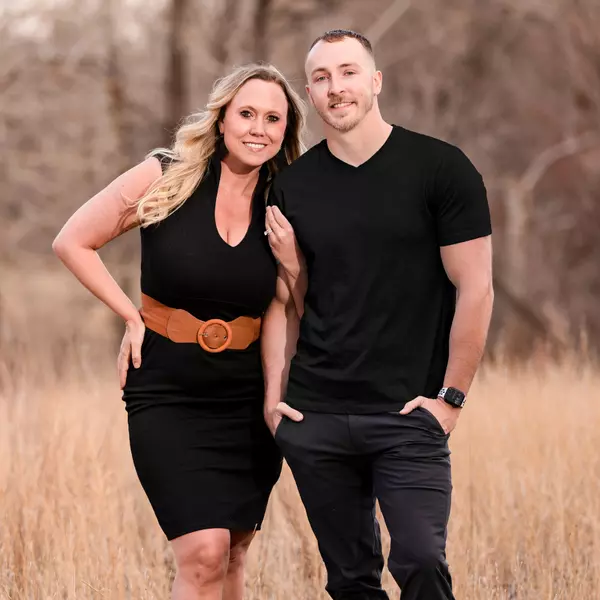
We're Crystal & Shawn with Everyday Properties & Investments, powered by eXp Realty. We're Colorado natives and Colorado Springs REALTORS® with more than seven years of real estate experience, and we've helped more than 300 families buy and sell homes throughout Colorado Springs and the surrounding Pikes Peak region.
This First-Time Home Buyer's Guide walks you through the process from the very beginning, including financing, down payments, choosing an agent, searching for homes, making an offer, inspections, appraisal and finally getting the keys.
And we're going to explain it like normal humans.
Because buying your first house is complicated enough without making the explanation complicated too.
First-Time Home Buying: The Quick Version
Here's the process before we get into the details:
1. Figure out your comfortable monthly budget
2. Talk with a mortgage lender and get pre-approved
3. Choose your real estate agent and understand your buyer agreement
4. Decide what you actually need in a home
5. Start touring homes
6. Write an offer when you find the right one
7. Complete inspections and due diligence
8. Your lender completes underwriting and appraisal
9. Review your final loan and closing numbers
10. Complete your final walkthrough, close and get the keys
Simple on paper.
There are obviously a few details hiding between Step 1 and Step 10. 😂
That's what the rest of this guide is for.
Table of Contents
- How Do You Know If You're Ready to Buy?
- How Much Money Do You Need to Buy Your First Home?
- Do First-Time Buyers Need 20% Down?
- First-Time Home Buyer Programs in Colorado
- Getting Pre-Approved
- Choosing Your Buyer's Agent
- Understanding Buyer Agent Compensation
- Creating Your Home Search
- Touring Homes
- Making an Offer
- Earnest Money
- Home Inspections
- Appraisal
- What Happens While You're Under Contract?
- Closing Costs and Cash to Close
- Final Walkthrough and Closing
- First-Time Buyer Mistakes to Avoid
- The Trade-Offs, Because We'll Be Straight With You
- Frequently Asked Questions
1. How Do You Know If You're Ready to Buy a Home?
Your first question shouldn't be:
"How much house will a lender approve me for?"
It should be:
"What housing payment am I actually comfortable living with?"
Those are not always the same number.
Before you start scrolling through listings at midnight and mentally placing your furniture in houses you haven't seen yet, take a look at your entire financial picture.
Consider your income, monthly debt, savings, upcoming expenses and how much money you want left after paying for your house every month.
Your housing expense can include more than principal and interest. Depending on the property and your loan, your monthly cost could also include:
- Property taxes
- Homeowners insurance
- Mortgage insurance
- HOA dues
- Metro district-related taxes or fees
- Utilities
And once you own the house, there's no landlord to call when the water heater decides it has lived a full and meaningful life.
Homeownership means maintenance belongs to you too.
One of the first things we tell buyers is to look at the payment, not just the purchase price.
2. How Much Money Do You Need to Buy Your First Home?
This is where one of the biggest home-buying myths shows up:
You do NOT necessarily need 20% down to buy a house.
Some qualified buyers may have conventional options with as little as 3% down. Freddie Mac's Home Possible program and Fannie Mae's HomeReady program, for example, offer qualifying borrowers down-payment options as low as 3%.
FHA-insured financing can allow a minimum 3.5% down payment for borrowers who meet applicable requirements, including the FHA credit-score requirements associated with that down-payment level.
Eligible VA borrowers may have the option to purchase with no down payment, subject to VA and lender requirements and the property's appraised value.
But your down payment isn't the only money you need to think about.
Depending on your transaction, you may also have expenses involving:
- Earnest money
- Home inspection
- Additional property inspections
- Appraisal
- Closing costs
- Prepaid taxes and insurance
- Moving
- Immediate repairs or purchases
That's why we'd rather connect you with a lender early than have you save toward an arbitrary number you found online.
3. Do You Need 20% Down to Buy Your First Home?
No.
Let's kill this one completely because it keeps potential homeowners renting longer than they may need to.
Twenty percent is not a universal minimum down payment.
Putting more money down can have advantages, and different loan programs have different requirements. But there are conventional, FHA, VA and assistance-program options that may require substantially less for qualified borrowers.
The right question isn't:
"What's the smallest down payment possible?"
It's:
"Which financing structure makes the most sense for my entire financial situation?"
Those can lead to two very different answers.
4. First-Time Home Buyer Programs in Colorado
This is a section we really want Colorado buyers to read because down-payment assistance exists, and you shouldn't assume you make too much, don't have enough saved, or simply won't qualify without talking to a qualified lender.
The Colorado Housing and Finance Authority (CHFA) offers homeownership programs through participating lenders, including mortgage programs and assistance with down payments and/or closing costs.
As of September 2026, CHFA lists two primary down-payment assistance options when paired with eligible CHFA first-mortgage programs:
CHFA Down Payment Assistance Grant: Up to the lesser of $25,000 or 3% of the first mortgage, with no repayment required.
CHFA Second Mortgage Loan: Up to the lesser of $25,000 or 4% of the first mortgage, with repayment deferred until certain events such as payoff, sale, refinance or the property no longer being the borrower's primary residence. Restrictions apply, and CHFA notes that higher interest rates apply to these assistance options.
CHFA also offers programs with different eligibility requirements, including options for certain first-generation buyers.
Do not choose a house based on these numbers before confirming current eligibility with a participating lender. Programs, income limits, rates and requirements can change.
Explore current CHFA homebuyer programs
5. Get Pre-Approved Before You Start Seriously Shopping
We know.
Looking at houses is much more fun than sending financial documents to a mortgage lender.
Do the lender part first anyway. 😂
A mortgage lender can review your financial information and help you understand which loan programs you may qualify for, your estimated payment, cash-to-close requirements and potential purchase range.
But here's the part we really care about:
Ask the lender for the PAYMENT.
Don't just say:
"What's the most expensive house I can buy?"
Ask:
"What purchase price keeps my estimated total monthly housing payment around $_____?"
That gives us a much more useful number for your home search.
Shop Lenders Too
You can compare mortgage options.
The Consumer Financial Protection Bureau recommends comparing Loan Estimates from multiple lenders. A Loan Estimate gives you standardized information about things such as your estimated interest rate, monthly payment, closing costs, taxes and other loan expenses.
Compare more than the advertised interest rate.
Look at:
- Loan type
- Interest rate
- APR
- Points
- Lender fees
- Mortgage insurance
- Estimated monthly payment
- Estimated closing costs
- Estimated cash to close
A slightly different rate doesn't tell you the whole story.
6. Choose Your Real Estate Agent
Your lender handles your mortgage.
Your real estate agent helps you navigate the actual purchase.
That includes much more than unlocking doors.
Your agent can help you understand the market, create your search, evaluate properties, review comparable sales, structure offers, negotiate, navigate deadlines, coordinate inspections, communicate with the listing side, work with your lender and title company and help keep the transaction moving toward closing.
For a first-time buyer, we think one of the most important things an agent can do is simply explain what happens next.
You should never feel like you're signing something because everyone else seems to know what it means and you're embarrassed to ask.
Ask.
We'd rather explain something three different ways than have you sign a contract you don't understand.
Your Buyer Agreement Matters
Before working with an agent, you're likely going to discuss and sign an agreement explaining the relationship between you and the brokerage.
Read it.
Ask about:
- Length of the agreement
- Geographic area
- Services provided
- Exclusivity
- How compensation works
- What happens if a seller doesn't pay the amount owed to your brokerage
- How the agreement can be modified or ended
Colorado Real Estate Commission forms explicitly state that brokerage compensation is not set by law and is fully negotiable.
We'll walk our buyers through our agreement and compensation structure before they sign so they understand what they're agreeing to.
7. How Does Your Buyer's Agent Get Paid?
This changed enough in the industry that it deserves a real explanation.
Buyer-agent compensation should be discussed with your agent before you begin touring homes, not treated like some mysterious number that magically disappears at closing.
Your written agreement with your brokerage will state how compensation works.
Depending on the transaction, compensation may come from the seller, listing brokerage, buyer, or another negotiated structure permitted in the transaction.
The important part is this:
Do not assume.
Ask your agent:
"What am I agreeing to pay, what are we going to request from the seller, and what could I personally be responsible for?"
We walk our buyers through this because we don't want compensation to become a surprise after they've fallen in love with a house.
8. Create Your Home Search
Now we get to the fun part.
Before we start sending you every house in Colorado Springs with the correct number of bedrooms, we'll narrow down what actually matters.
There are three categories we like buyers to think about:
Must-Haves
Things that truly make or break the house.
Maybe you need a certain number of bedrooms because you work from home.
Maybe you need a particular garage configuration.
Maybe the property must fit within a specific commute.
Would-Be-Nice
These matter, but you could compromise.
A finished basement.
Mountain views.
A giant kitchen island.
Three-car garage.
Absolutely Not
This list is underrated.
Maybe you don't want stairs.
Maybe you don't want a large yard.
Maybe you don't want an HOA.
Maybe a major renovation is the last thing you want to take on.
Knowing what you don't want can save us a lot of pointless showings.
Don't Search Only by Purchase Price
Two homes with identical prices can have very different monthly costs.
Property taxes, homeowners insurance, HOA dues and other property-specific expenses can change the payment.
That's especially important around Colorado Springs and surrounding communities where tax structures and metro districts can vary by location and property.
Before you write an offer, understand the property-specific numbers.
9. Start Touring Homes
Here's where Pinterest meets reality. 😂
Online photos are designed to make a property look good.
That's their job.
When you're actually touring, look beyond paint colors and furniture.
Pay attention to:
- Layout
- Natural light
- Storage
- Exterior condition
- Roof
- Windows
- Signs of water intrusion
- Heating and cooling systems
- Lot
- Drainage
- Street and surroundings
- Parking
- Visible maintenance
- Potential renovation needs
You don't need to become an inspector.
That's why we hire inspectors later.
But don't let pretty staging distract you from the house itself.
And yes, we own Everyday Staging, so we say that as people who literally stage homes. 😂
Good staging helps buyers understand a space.
It should not make you stop evaluating the property.
10. You Found the House. Now What?
This is the moment when first-time buyers usually go:
"Okay... so what do we offer?"
And the answer shouldn't automatically be:
"Full price."
Or:
"Offer $20,000 under."
The strategy depends on the house and current market.
Before writing the offer, we can look at factors such as:
- Comparable sales
- Current competition
- How long the property has been listed
- Property condition
- Price changes
- Your financing
- Desired closing timeline
- Seller concessions you may want to request
- Inspection terms
- Appraisal considerations
- Other terms that matter to you
Price is only one part of an offer.
The strongest offer isn't necessarily the one with the highest number.
It's the combination of price and terms that makes sense for the buyer while still being competitive enough for the seller to accept.
11. What Is Earnest Money?
Earnest money is money you provide as part of the purchase contract to demonstrate your commitment to the transaction.
The amount, deadline, holder and terms surrounding it are established in your contract.
And no, earnest money isn't simply an extra random fee on top of the house.
Depending on what happens in the transaction and the terms of your contract, it may ultimately be credited as part of your funds at closing.
But your rights to recover earnest money depend on your contract and circumstances.
That's why deadlines and contingencies matter.
Do not miss contract deadlines.
We help track those dates throughout the transaction.
12. Get the Home Inspected
This is one place where we do not want first-time buyers getting emotionally attached too early.
You may love the kitchen.
Fantastic.
Now let's figure out what's happening in the crawl space. 😂
A professional home inspection can help you understand the property's condition.
Depending on the house, buyers may also consider specialized inspections or evaluations such as:
- Sewer scope
- Radon testing
- Roof evaluation
- HVAC evaluation
- Structural evaluation
- Well or septic inspection
- Other property-specific inspections
Not every property needs every inspection.
We'll discuss what makes sense based on the home, but inspectors and other qualified professionals are the people who evaluate the technical condition of those systems.
Radon in Colorado
Radon deserves particular attention here.
The Colorado Department of Public Health and Environment recommends testing homes for radon because it can't be seen, smelled or tasted, and levels can vary from one property to another.
The takeaway is simple:
Don't guess based on the neighborhood. Test the property.
13. Inspection Doesn't Mean "Make the House Brand New"
This is an important mindset.
You're generally buying an existing house, not ordering one from a factory.
An inspection can reveal:
- Safety concerns
- Defects
- Deferred maintenance
- Aging systems
- Minor issues
- Major issues
Then we look at the whole picture.
What matters?
What should you investigate further?
What are you comfortable accepting?
What might you want addressed through the contract process?
The goal isn't to panic because the inspector found things.
Inspectors are supposed to find things.
The goal is to understand what you're buying and make informed decisions before your contractual deadlines.
14. What Is an Appraisal?
If you're financing your purchase, your lender may require an appraisal.
The appraisal is different from the home inspection.
Inspection: focuses on helping you understand the property's condition.
Appraisal: provides an opinion of the property's value for lending purposes and may involve additional loan-program requirements.
If the appraisal comes in at or above what's needed for the transaction, great.
If it comes in lower than expected, your options depend on your contract, financing and circumstances.
This is another reason the details of your offer matter before you sign it.
15. What Happens While You're Under Contract?
There is a lot happening behind the scenes.
While you're doing inspections and making property decisions, your lender is working on the mortgage.
The title company is working on the closing and title side.
The listing side is handling seller obligations.
And we're keeping track of the real estate contract, deadlines, negotiations and communication.
This is also the time when you should be very careful about making major financial changes.
Before opening a new credit card, financing furniture, buying a vehicle, changing jobs or moving significant amounts of money around, talk to your lender first.
Don't celebrate your accepted offer by financing a living room full of furniture. 😂
Wait until your lender tells you what's safe to do.
16. Understand Your Closing Costs
Your down payment and your closing costs are different things.
Closing costs can include various lender and transaction expenses, prepaid items and escrow funding depending on your loan and transaction.
Your lender's Loan Estimate is one of the best documents for understanding the projected numbers.
The CFPB explains that your Loan Estimate includes information such as the loan amount, interest rate, estimated monthly payment, closing costs, taxes and estimated cash to close.
Don't just look at the interest rate.
Look at the entire page.
And ask questions.
17. What Is Cash to Close?
This is the number that matters when you're trying to figure out what you'll actually need at closing.
Your cash to close generally takes into account your down payment, closing costs and other adjustments, minus items such as deposits you've already made and applicable seller or lender credits.
This is another reason saying:
"I'm putting 5% down, so that's all the cash I need."
can get buyers into trouble.
Get the estimated cash-to-close number from your lender.
18. Review Your Closing Disclosure
For most mortgages covered by these federal disclosure rules, you'll receive a Closing Disclosure at least three business days before closing.
This document gives you the final details of the mortgage, including the loan terms, projected payments and closing costs.
Compare it with your Loan Estimate.
Check:
- Loan amount
- Loan type
- Interest rate
- Monthly payment
- Closing costs
- Cash to close
If something doesn't look right, ask before closing.
The CFPB specifically recommends using that review period to resolve questions or discrepancies.
19. Do Your Final Walkthrough
Before closing, you'll typically have an opportunity to complete a final walkthrough.
This isn't another full inspection.
You're generally confirming that the property's condition is consistent with what you're expecting and checking on agreed-upon items.
We'll tell you what we want to look at based on your particular transaction.
And then...
20. Closing Day 🎉
This is the day you've been waiting for.
You'll sign your closing documents, your loan and transaction will complete the required funding/closing process, and once everything required for possession is satisfied under your contract:
You get the keys.
The first time someone hands you keys to a house you actually own is pretty freaking cool.
Take the picture.
Seriously.
You only buy your first home once.

First-Time Home Buyer Mistakes We Want You to Avoid
Waiting Until You Have 20% Down
You may not need it.
Talk to a lender before assuming homeownership is years away.
Shopping Before Knowing Your Payment
The internet will happily show you $600,000 houses when your comfortable payment says otherwise.
Don't torture yourself. 😂
Know your numbers first.
Spending Every Dollar You Have on the Purchase
Owning a home with $14 left in your bank account is not the goal.
Keep emergency savings in mind.
Financing Something During the Transaction
Please don't buy the new truck because your offer got accepted.
Ask your lender first.
Skipping Inspections Just to Make an Offer Stronger
Understand the risk before waiving any contractual protection.
Competitive doesn't have to mean reckless.
Falling in Love With Cosmetic Features
Paint can change.
Countertops can change.
Location and lot are significantly harder to change.
Ignoring the Total Monthly Cost
Taxes, insurance, HOA and other expenses matter.
Not Asking Questions
This might be the biggest one.
Nobody was born understanding title insurance and inspection objections.
You're allowed to be new at this.
Our job is to make sure you're educated enough to make your own decisions.
The Trade-Offs, Because We'll Be Straight With You
Buying a home isn't automatically the right financial decision for every person at every moment.
Sometimes renting longer makes sense.
Sometimes buying with less money down makes sense.
Sometimes waiting and saving more makes sense.
Sometimes a townhome fits your budget better than a single-family home.
Sometimes new construction gives you what you want, but you need to understand taxes, HOA or metro district costs and what's actually included with the property.
Sometimes the cute older house has character and mature landscaping, but also older systems that need attention.
And sometimes the house that's $25,000 less expensive isn't actually less expensive to own once you look at repairs, insurance, taxes or other property-specific costs.
Our goal isn't to talk you into buying a house.
Our goal is to help you understand whether buying makes sense for you, what you can comfortably afford, and what you're actually buying.
That's how we want a first home purchase to start.
Frequently Asked Questions
How much do first-time home buyers need for a down payment?
There is no single required percentage for every buyer. Some conventional programs offer qualifying borrowers options as low as 3% down, FHA financing can allow 3.5% down for borrowers meeting applicable requirements, and eligible VA borrowers may qualify for no-down-payment financing.
Do I need a 20% down payment to buy a home?
No. Twenty percent down is not a universal requirement. Your actual minimum depends on your loan program, qualifications and property.
Are there first-time home buyer programs in Colorado?
Yes. CHFA currently offers mortgage and down-payment/closing-cost assistance options through participating lenders. Eligibility, limits, rates and program requirements apply and can change.
Should I get pre-approved before looking at houses?
Yes, getting pre-approved before seriously shopping is usually helpful because it gives you a clearer understanding of your financing and helps you build a home search around realistic numbers.
What's the difference between an inspection and an appraisal?
A home inspection evaluates the condition of the property for the buyer, while an appraisal provides an opinion of value for lending purposes and may address additional loan-program requirements. They serve different purposes.
How long does it take to buy a house?
There is no universal timeline. Your financing, contract, inspection period, appraisal, title work and other transaction-specific factors affect how long it takes. We establish the actual dates and deadlines in your purchase contract.
Can the seller pay my closing costs?
Seller concessions may be negotiated in some transactions, subject to the contract and limits or requirements of your loan program. Whether requesting them makes sense depends on the property, market and your financing.
Ready to Buy Your First Home in Colorado Springs?
You don't have to have everything figured out before you call us.
Actually, we'd rather you call before you have everything figured out.
If buying your first home is something you're considering in the next few months, six months, or even next year, we can help you understand what the path looks like.
Maybe you're ready now.
Maybe a lender tells us there are two things to work on first.
Maybe we discover a Colorado assistance program worth exploring.
Maybe we determine waiting is the smarter move.
That's okay.
The first step doesn't have to be touring a house.
The first step can simply be making a plan.
We're Crystal & Shawn with Everyday Properties & Investments, powered by eXp Realty, Colorado Springs REALTORS® and Colorado natives who have helped more than 300 families with real estate throughout the Pikes Peak region.
When you're ready to start asking questions, we're here.
Crystal & Shawn
Everyday Properties & Investments powered by eXp Realty
719.238.1771
Categories
Recent Posts