
Pros and Cons of Living in Colorado Springs

Pros and Cons of Living in Colorado Springs: What to Know Before You Move
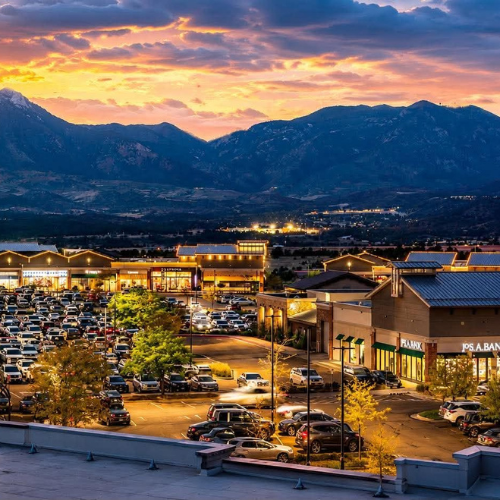
Colorado Springs can look pretty incredible on Instagram.
Pikes Peak in the background. Garden of the Gods. Blue skies. Hiking trails everywhere. Houses with mountain views.
And yes, all of that is real.
But so are hailstorms, altitude, a spread-out city, rising housing costs, wildly different commutes depending on where you live, and the occasional spring snowstorm that arrives after you were completely convinced winter was over.
If you're considering moving to Colorado Springs, you deserve more than a list telling you it's beautiful and there are mountains.
We're Crystal & Shawn with Everyday Properties & Investments, powered by eXp Realty. We're both Colorado natives, live in Meridian Ranch in Peyton, and have more than seven years of real estate experience helping buyers and sellers throughout Colorado Springs and the surrounding Pikes Peak region.
So let's talk about the real pros and cons of living in Colorado Springs, including housing, weather, outdoor recreation, military presence, getting around town, new construction and some of the trade-offs we think people should understand before deciding whether Colorado Springs fits what they're looking for.
Colorado Springs Pros & Cons at a Glance
|
Pros |
Cons |
|
Mountain scenery and outdoor access |
Housing isn't necessarily inexpensive |
|
Extensive parks, trails and open space |
Hail and unpredictable weather |
|
Four distinct seasons |
Colorado Springs is very spread out |
|
Wide variety of housing and communities |
Commutes vary significantly by location |
|
Significant military presence |
Altitude takes adjustment for some people |
|
Colorado Springs Airport |
Denver offers more nonstop flight options |
|
Plenty of new construction |
Some newer areas have HOA and/or metro district costs |
|
Urban, suburban and more rural options |
Property insurance deserves extra attention |
|
Different lifestyle than Denver |
Less big-city urban environment than Denver |
The short version?
Colorado Springs offers a pretty unique combination of city amenities, suburban communities and serious access to the outdoors. But where you live within the region can dramatically change your experience.
Table of Contents
- Pro: The Mountains Are Part of Everyday Life
- Pro: Outdoor Recreation Is Everywhere
- Pro: You Actually Get Four Seasons
- Pro: There Are Many Different Ways to Live Here
- Pro: Colorado Springs Has a Major Military Presence
- Pro: Colorado Springs Has Its Own Airport
- Pro: You Don't Have to Live Inside Colorado Springs
- Pro: There Is Significant New Construction
- Con: Housing Isn't Cheap Everywhere
- Con: Hail Is a Real Thing
- Con: The Weather Can Change Quickly
- Con: Colorado Springs Is Spread Out
- Con: Public Transportation May Not Replace a Car
- Con: The Altitude Takes Adjustment
- Con: HOA and Metro District Costs Can Vary
- Con: Insurance Needs to Be Part of the Home Search
- Con: Some Properties Have Wildfire Considerations
- Is Colorado Springs Right for You?
- Frequently Asked Questions
PRO #1: The Mountains Aren't Just Something You Visit
One of the biggest advantages of living in Colorado Springs is obvious the first time you drive around town on a clear day.
The Front Range is right there.
Pikes Peak dominates the western skyline, and Colorado Springs itself sits at an elevation of roughly 6,035 feet. (MilitaryINSTALLATIONS)
Depending on where you live, mountain views can be part of your normal drive to work, grocery run or morning walk.
And unlike living in an actual mountain town, you can still have access to major shopping, hospitals, restaurants, an airport and the other services you'd expect in a city.
That combination is one of the things that makes Colorado Springs different.
PRO #2: Outdoor Recreation Is a Huge Part of Colorado Springs
This one isn't marketing fluff.
Colorado Springs really does have an enormous park, trail and open-space system.
According to the City's 2025 Parks, Recreation and Cultural Services Annual Report, the system included approximately 18,675 acres of park land and 326 miles of trails, with more than 22.5 million visits to parks, trails and open spaces during 2025. (City of Colorado Springs)
Some of the better-known outdoor areas include:
- Garden of the Gods
- Red Rock Canyon Open Space
- Palmer Park
- Ute Valley Park
- North Cheyenne Cañon
- Manitou Incline
- Pikes Peak
- Austin Bluffs Open Space
The City's trail system includes everything from urban multi-use trails to natural-surface trails used for hiking, mountain biking, walking and other activities. (City of Colorado Springs)
You don't necessarily have to plan an entire weekend trip to get outside here.
Sometimes the trail is just down the road.
PRO #3: You Actually Get Four Seasons
If you like seasonal change, Colorado Springs gives it to you.
According to National Weather Service 1991-2020 climate normals for Colorado Springs, the normal daily high is about 45°F in January and 86.5°F in July. (National Weather Service)
And yes, it snows.
The same NWS station records normal annual snowfall of about 32.5 inches, but that's one official observation point, not a promise about what will fall in your particular driveway. Snowfall can vary around the region. (National Weather Service)
One thing that surprises people relocating from warmer climates is that snow isn't limited to December and January.
The NWS normals show measurable snowfall extending well into spring. March actually has a higher normal snowfall total than January at the official Colorado Springs station. (National Weather Service)
So yes, you can have gorgeous spring weather.
And then Colorado may decide we're doing winter again.
Welcome. 😂
PRO #4: There Are A LOT of Different Ways to Live Here
When someone tells us they're moving to Colorado Springs, "Colorado Springs" alone doesn't narrow the search nearly enough.
You can find:
- Established neighborhoods
- Newer master-planned communities
- Downtown condos
- Older ranch-style homes
- New construction
- Larger lots
- Acreage
- Townhomes
- Patio-style homes
- Golf-course communities
- Luxury properties
- Communities closer to the foothills
- More suburban development farther east and north
And the broader area adds even more options.
Depending on what you're looking for, your search might include places such as Briargate, Wolf Ranch, Banning Lewis Ranch, Stetson Hills, Northgate, Old Colorado City, Falcon, Peyton, Meridian Ranch, Black Forest, Monument, Fountain or Security-Widefield.
None of those is automatically "better."
They simply offer different combinations of location, housing, lot size, age, amenities, commute and cost.
PRO #5: Colorado Springs Has a Major Military Presence
Military life is a significant part of the Colorado Springs region.
Local installations include Fort Carson, Peterson Space Force Base, Schriever Space Force Base and the U.S. Air Force Academy, with Cheyenne Mountain also part of the area's military landscape. (MilitaryINSTALLATIONS)
That means PCS moves, VA financing and military homeownership are common parts of the local housing market.
If you're PCSing here, though, don't choose a house simply because someone online says it's "close to base."
Which installation?
Which gate?
What time are you commuting?
Those questions matter.
Peterson sits on the eastern side of Colorado Springs, Fort Carson is southwest of the city, Schriever is farther east, and the Air Force Academy is north/northwest. (MilitaryINSTALLATIONS)
That's exactly why we built a separate military relocation resource.
PCS Guide to Colorado Springs
PRO #6: Colorado Springs Has Its Own Airport
You don't necessarily have to drive to Denver International Airport every time you fly.
Colorado Springs Airport (COS) gives residents a local commercial airport option.
For some trips, that can make flying much easier.
The trade-off is that Denver International is a much larger airport with substantially more flight options and destinations.
So this is one of those Colorado Springs pros that comes with an asterisk:
Local airport convenience = great.
Need a flight COS doesn't offer = hello, drive to Denver.
PRO #7: You Don't Have to Live Inside Colorado Springs
This is a big one for relocation buyers.
Your search doesn't necessarily have to stop at the city limits.
Depending on your priorities, you may also explore:
Peyton and Falcon to the east.
Monument to the north.
Black Forest northeast of the city.
Fountain and Security-Widefield to the south.
Each changes the equation when it comes to housing style, lot size, commute, taxes, amenities and access to different parts of the region.
We live in Meridian Ranch in Peyton, so the east side of the Pikes Peak region isn't something we just look up for an article. It's where we live.
But we'd never tell someone they should live here simply because we do.
The better question is whether the area fits your priorities.
PRO #8: New Construction Is a Significant Part of the Market
If you like new houses, Colorado Springs and the surrounding communities give you options.
New construction can offer:
- Modern floor plans
- Newer systems
- Current finishes
- Builder warranties
- Community amenities
- Different levels of customization depending on the builder and stage of construction
But don't let the model home smell hypnotize you. 😂
New construction still requires homework.
Ask about:
- Property taxes
- Metro districts
- HOA dues
- Landscaping
- Fencing
- Air conditioning
- Window coverings
- Appliances
- Lot premiums
- Builder incentives
- Warranty
- Inspection opportunities
And remember that the person sitting in the builder's sales office represents the builder.
You can have your own representation too.
CON #1: Colorado Springs Housing Isn't Necessarily Cheap
This is probably the biggest reality check for people moving here.
Colorado Springs is not the inexpensive little mountain city some people still picture.
Housing costs vary significantly by location and property type, which is why we don't want to put one temporary median home price in an evergreen relocation article and pretend it describes every neighborhood.
A buyer looking at a condo near central Colorado Springs is in a completely different market from someone looking for acreage in Black Forest or a larger newer home in northern Colorado Springs.
Your actual monthly housing cost can also include:
- Principal and interest
- Property taxes
- Homeowners insurance
- HOA dues
- Metro district-related taxes or fees
- Utilities
- Maintenance
If affordability is an important part of your move, our separate Cost of Living guide digs into those numbers.
CON #2: Hail Is Not Just a Cute Colorado Weather Fact

Colorado weather can be rough on roofs and exteriors.
That means when you're buying a house here, the roof deserves attention.
Don't assume:
"It looks fine from the driveway."
is a roof inspection. 😂
Ask about the roof's age, available permits or documentation, insurance history when appropriate, and what your inspector or qualified roofing professional observes.
Also understand your homeowners insurance coverage and deductible before closing.
CON #3: Colorado Weather Has Commitment Issues
This could technically be a pro or a con depending on your personality.
Colorado Springs can have warm sunshine followed by dramatically different weather.
Spring is especially good at keeping people humble.
The National Weather Service climate normals show average measurable snowfall in March and April, even though daytime temperatures are warming by then. (National Weather Service)
If you're relocating from somewhere that shuts down when three snowflakes hit the windshield, winter driving may take some adjustment.
And don't pack away every jacket after the first warm March weekend.
Colorado will sense your confidence.
CON #4: Colorado Springs Is Spread Out
This is one of the biggest things we want relocating buyers to understand.
Looking at a map can make everything seem reasonably close.
Living it every day is different.
Your experience can change dramatically depending on whether you live north, south, east, west or central.
Instead of asking:
"How far is this house from downtown?"
think about where you'll actually go every day.
Where is work?
Which military installation?
Where are your regular appointments?
Where do you shop?
How often will you use I-25?
How often will you use Powers Boulevard?
If you're considering a particular property, map your real commute at the actual time you'd normally drive it.
We're intentionally not giving you a generic "everything is 20 minutes away" number because traffic doesn't work that way.
CON #5: A Car Is Important in Many Parts of the Region
Colorado Springs has public transportation, but this isn't the same experience as living in a dense city where you can reasonably expect to complete most daily trips without a vehicle.
Where you live matters.
Some areas give you easier access to shops, restaurants, trails and other amenities.
Other suburban areas mean you'll be getting in the car for most errands.
If walkability is one of your top priorities, tell us before we start your search.
That changes where we look.
CON #6: The Altitude Can Be an Adjustment
Colorado Springs sits at approximately 6,035 feet above sea level.
If you're moving here from close to sea level, you may notice the elevation at first.
Give yourself time to acclimate, particularly before deciding your first Colorado weekend should involve proving something to Pikes Peak. 😂
Hydration, sun protection and gradually increasing strenuous activity are sensible considerations when adjusting to elevation.
For medical questions or concerns about altitude, talk with a qualified healthcare professional.
CON #7: HOA and Metro District Costs Can Change the Numbers
This one matters a LOT when comparing houses.
Two homes with similar list prices can have very different total monthly housing costs.
Some communities have an HOA.
Some are within a metro district.
Some may involve both.
And what those organizations or districts fund can vary.
Before buying, understand:
- HOA dues
- HOA documents and rules
- Metro district information
- Property-specific taxes
- What amenities or services are included
- Any other recurring property-specific costs
Don't compare homes using list price alone.
[INTERNAL LINK: Colorado Metro Districts Explained]
CON #8: Homeowners Insurance Needs to Enter the Conversation Early
Insurance shouldn't be something you investigate two days before closing.
The home's age, roof, location, construction and other factors can affect insurability and premiums.
When you're seriously considering a property, get an insurance quote early enough to understand how it affects your monthly payment and whether there are property-specific concerns.
The house isn't affordable just because the principal-and-interest payment fits your spreadsheet.
CON #9: Wildfire Risk Matters for Some Properties
Colorado gives us incredible access to foothills, forests and open land.
That can also create property-specific wildfire considerations.
This doesn't mean we label neighborhoods "safe" or "unsafe."
Instead, if you're considering a property where wildfire exposure may be relevant, investigate:
- Official wildfire-risk information
- Property characteristics
- Defensible-space considerations
- Insurance availability and cost
- Local mitigation resources
Evaluate the specific property, not a sweeping internet claim about an entire ZIP code.
CON #10: Colorado Springs Isn't Denver
This sounds obvious.
But it's worth saying.
If what you want is a much larger metro environment with a denser urban core, broader big-city entertainment and nightlife, and the transportation options that come with a larger city, Colorado Springs may feel quieter.
For some people, that's the entire reason they're considering it.
For someone else, that's the dealbreaker.
Neither answer is wrong.
Colorado Springs doesn't need to be Denver Lite.
It's its own place...
Crystal and Shawn did a video on this topic exactly- Watch our Video here
So... Is Colorado Springs a Good Place to Live?
That's not really the question we'd ask.
We'd ask:
Is Colorado Springs a good fit for the way YOU want to live?
If your priorities include access to mountains and trails, multiple housing styles, suburban options, military installations and a somewhat smaller-city environment than Denver, there may be a lot here that fits.
If you want dense urban living, extensive public transit, mild winters or zero possibility of hail attacking your patio furniture, there are trade-offs to consider.
And even if Colorado Springs itself fits, where you live within the region matters tremendously.
That's why we don't start relocation conversations by telling people where they should live.
We start by asking questions.
What Part of Colorado Springs Should You Consider?
Before choosing an area, we'd narrow down five things:
Budget: Not just purchase price. What total monthly housing expense are you comfortable with?
Commute: Where do you actually need to go regularly?
Property: Older or newer? Townhome or single-family? Small lot or acreage? Finished basement? Garage?
Community structure: HOA? Metro district? Community amenities? Or would you prefer fewer layers?
Everyday life: What do you actually want close to you?
Then we compare areas.
That might point you toward northern Colorado Springs.
Or the east side.
Or an established central neighborhood.
Or Monument.
Or Peyton.
Or Fountain.
The goal isn't finding the neighborhood someone else declared "best."
It's finding the location and property combination that makes sense for you.
The Trade-Offs, Because We'll Be Straight With You
This is probably the section we'd want someone to read if they read nothing else.
Colorado Springs has phenomenal outdoor access.
Trade-off: You're living at elevation and dealing with Colorado weather.
There are plenty of newer communities.
Trade-off: Some have HOA and/or metro district considerations you need to understand.
You can live farther east, north or south and open up different housing options.
Trade-off: Your commute may change.
You can buy an older home with established surroundings and mature landscaping.
Trade-off: Older systems and maintenance may require more attention.
You can live closer to the foothills and mountain environment.
Trade-off: Property-specific insurance and wildfire considerations may become more important.
You can have gorgeous mountain views.
Trade-off: Apparently you eventually get used to them.
Okay, we're still waiting on that last one. 😂
Frequently Asked Questions
What are the biggest pros of living in Colorado Springs?
The biggest advantages include mountain access, extensive parks and trails, four seasons, multiple housing and community types, a significant military presence and having a commercial airport within the city.
What are the biggest cons of living in Colorado Springs?
Common trade-offs include housing costs, hail and changing weather, altitude, a spread-out metro area, varying commutes and property-specific costs such as insurance, HOA dues and metro district-related expenses.
Is Colorado Springs cheaper than Denver?
It depends on what you're comparing. Housing, taxes, insurance, transportation and other expenses vary by location and property, so we recommend comparing your actual expected costs rather than relying on a broad city-to-city percentage.
[INTERNAL LINK: Colorado Springs vs Denver]
Does Colorado Springs get a lot of snow?
Colorado Springs does receive measurable snow. National Weather Service 1991-2020 normals show about 32.5 inches annually at the official station, but snowfall varies around the region and from year to year. (National Weather Service)
Is Colorado Springs a good location for military relocation?
Colorado Springs has several major military installations, including Fort Carson, Peterson Space Force Base, Schriever Space Force Base and the U.S. Air Force Academy. The best housing location depends heavily on your assigned installation, commute, budget and property preferences. (MilitaryINSTALLATIONS)
Is it hard to adjust to the altitude in Colorado Springs?
Some people notice the elevation when they first arrive. Colorado Springs sits at approximately 6,035 feet, so newcomers should allow time to acclimate and consult a healthcare professional if they have medical concerns about altitude.
Should I rent before buying in Colorado Springs?
There isn't one right answer. Renting first may make sense if you're unsure about location, finances or how long you'll stay, while buying may fit someone who understands the area and is financially prepared for homeownership. Consider your individual circumstances rather than following a universal rule.
Thinking About Moving to Colorado Springs?
Here's what we'd tell you before you start picking neighborhoods from TikTok videos:
Come experience the areas you're considering if you can.
Drive your commute.
Go to the grocery store.
Drive through the neighborhood at different times.
Look at the houses.
Look at the taxes.
Understand the HOA or metro district.
Get an insurance quote.
Figure out what your everyday life would actually look like there.
And if you're moving from another state and can't do all of that yourself, that's where having people here who know the area becomes especially valuable.
We're Crystal & Shawn with Everyday Properties & Investments, powered by eXp Realty. We're Colorado natives, live in Meridian Ranch in Peyton, and have helped more than 300 families with real estate throughout Colorado Springs and the surrounding Pikes Peak region.
If you're thinking about making the move, tell us what matters to you.
We'll help you figure out which parts of Colorado Springs deserve a closer look.
Crystal & Shawn
Everyday Properties & Investments powered by eXp Realty
719.238.1771
Categories
Recent Posts