
Conventional Loan Guide 2026 | Colorado Springs Buyers


Conventional Loan Guide (2026): How Conventional Mortgages Work for Colorado Springs Home Buyers
A conventional loan is a mortgage that isn't insured or guaranteed by a government agency like the FHA, VA, or USDA. Most conventional loans follow rules set by Fannie Mae and Freddie Mac, and in El Paso County the 2026 conforming loan limit for a single-family home is $832,750. You can put as little as 3% down if you qualify, you'll pay private mortgage insurance (PMI) if you put down less than 20%, and unlike FHA mortgage insurance, PMI is designed to go away.
That's the short version. The longer version is where the money is, because the difference between a "fine" conventional loan and a smart one usually comes down to down payment strategy, PMI, credit, and how you write your offer. Let's get into it.
What Is a Conventional Loan, Really?
"Conventional" just means the loan comes from a private lender without a government backstop. The lender (or the investor who buys the loan) carries the risk instead of the federal government. That's why conventional loans lean harder on your credit profile, your debt-to-income ratio, and how much skin you have in the game.
There are two main flavors:
- Conforming loans: These meet Fannie Mae and Freddie Mac guidelines, including the loan limit set each year by the Federal Housing Finance Agency (FHFA). This is what most people mean when they say "conventional."
- Non-conforming (jumbo) loans: These go above the conforming limit. Lenders set their own rules, and they're usually stricter about credit, reserves, and down payment.
Conventional loans can be fixed-rate (15, 20, or 30 years are common) or adjustable-rate. They can be used for a primary home, a second home, or an investment property, which is a big deal compared to FHA, VA, and USDA loans, which are built for owner-occupants.
2026 Conventional Loan Limits in Colorado Springs and El Paso County
For 2026, the FHFA set the baseline conforming loan limit for a one-unit property at $832,750, up from $806,500 in 2025 (Experian summary of FHFA limits). El Paso County uses that baseline limit, according to this 2026 county limit lookup.
A few things people get wrong here:
- The limit is on the loan amount, not the price. If you're buying a $950,000 home in Flying Horse or Monument and putting $150,000 down, your $800,000 loan still fits under the conforming limit.
- Multi-unit properties have higher limits. Duplexes, triplexes, and fourplexes each have their own conforming limit, so ask your lender for the current number if you're house hacking.
- Go over the limit and you're in jumbo territory. That's not bad, it's just a different set of rules. Some buyers bring a bit more down to stay conforming. Others take the jumbo. Run both with your lender.
How Much Do You Need to Put Down?
Less than most people think. Here's the general lay of the land for a primary residence:
3% down
Fannie Mae allows 97% loan-to-value financing for qualified first-time homebuyers, and at least one borrower on the loan has to be a first-time buyer (Fannie Mae announcement). Some affordable lending programs with income limits also allow 3% down. "First-time buyer" in mortgage-land often means you haven't owned a home in the last three years, so a lot of people who think they don't qualify actually do. Your lender will confirm.
5% to 19% down
This is the sweet spot for a lot of Colorado Springs buyers. You'll pay PMI, but more down usually means a smaller PMI payment and a stronger-looking offer to a seller.
20% or more down
No PMI. That's the headline benefit. But here's the straight talk: draining every dollar you have to hit 20% isn't automatically the smart move. If it leaves you with no cushion for a furnace, a hailstorm deductible, or a surprise sprinkler repair, you've traded a monthly PMI bill for a stress problem. Sometimes 10% down plus a healthy savings account is the better play.
Second homes and investment properties
Expect to put more down and qualify under stricter terms. The exact minimums depend on the property type and the loan, so get numbers from your lender before you fall in love with a rental.
Down payment assistance
Some Colorado assistance programs, including options through the Colorado Housing and Finance Authority (CHFA), can be paired with conventional financing. Programs have income limits, purchase price limits, and education requirements, and they change, so check directly with CHFA or a participating lender.
PMI: The Part Everybody Asks About
Private mortgage insurance protects the lender, not you. It's annoying. It's also the reason you can buy without 20% down, so it earns its keep.
What makes conventional PMI different from FHA mortgage insurance is that federal law gives you a way out. Under the Homeowners Protection Act, as explained in the FDIC's compliance manual:
- You can request cancellation once your balance is scheduled to reach, or actually reaches, 80% of the home's original value. You'll need a good payment history, be current, and the lender can require evidence the value hasn't dropped.
- It terminates automatically when your balance is scheduled to hit 78% of the original value, as long as you're current on payments.
- There's a final backstop at the midpoint of your loan term if PMI somehow hasn't come off yet.
"Original value" is generally the lower of the purchase price or the appraised value when you bought. These rules don't apply to lender-paid mortgage insurance, so if a lender offers that option, understand the trade-off: no separate PMI line on your statement, but it's usually baked into a higher rate for the life of the loan.
One thing we tell our buyers: if your home's value goes up and you want PMI off sooner, call your servicer and ask what their process is. Many servicers have their own rules for removing PMI based on a new appraisal. It's worth the phone call.
Credit Score and Debt-to-Income: What Lenders Look At
For years the rule of thumb was a 620 minimum credit score for a conventional loan. In late 2025, Fannie Mae updated its Selling Guide to remove the hard minimum credit score for loans run through its Desktop Underwriter system (Orrick summary). Translation: the automated system now weighs your whole credit picture instead of a single cutoff.
Before you celebrate, two reality checks:
- Lenders can still set their own minimums (called overlays). Plenty of them do.
- Your score still drives your price. Conventional loans are priced by risk, so a higher score usually means a better rate and cheaper PMI. A lower score might get approved and still cost you real money every month.
Debt-to-income (DTI) is the other big number. It's your monthly debts, including the new house payment, divided by your gross monthly income. Your lender will tell you where your file lands. Just know that everything counts: car payments, student loans, credit card minimums, and yes, HOA dues.
Speaking of HOAs, they're real, they have rules, and they read them. We live in Meridian Ranch, and we have personally collected more than a handful of covenant notices for not pulling our trash cans back up the same day they were emptied. Budget for the dues. Read the covenants. Bring your cans in.
Conventional vs FHA vs VA vs USDA
Here's a quick, honest comparison. This is general information, and your lender is the final word on what fits your situation.
|
Feature |
Conventional |
FHA |
VA |
USDA |
|---|---|---|---|---|
|
Who it's for |
Most buyers with solid credit |
Buyers who need flexible credit standards |
Eligible veterans, service members, and some surviving spouses |
Eligible buyers in eligible rural areas with income limits |
|
Minimum down |
As low as 3% for qualified buyers |
As low as 3.5% |
Often 0% with full entitlement |
Often 0% |
|
Mortgage insurance |
PMI under 20% down, can be removed |
FHA MIP, often for the life of the loan |
No monthly mortgage insurance; funding fee may apply |
Upfront and annual guarantee fees |
|
Property types |
Primary, second home, investment |
Primary residence |
Primary residence |
Primary residence in eligible areas |
|
Appraisal standards |
Focused on value |
Value plus FHA property standards |
Value plus VA minimum property requirements |
Value plus USDA property standards |
For our military clients, this is a conversation we have a lot. A VA loan is often the strongest option for an eligible buyer, but not always. If you want to keep your VA entitlement available for a future duty station, or you're buying with a non-military co-borrower, a conventional loan might make more sense. Run both with a lender who does a lot of VA and conventional business, because the right answer depends on your numbers and your plans.
Why Sellers Often Like Conventional Offers
Let's be clear: FHA and VA buyers win homes in Colorado Springs all the time, and any listing agent worth their commission should treat every qualified offer seriously. Still, conventional financing can give you a few edges when you're competing:
- Appraisal focus. Conventional appraisals are mainly about value, while government loans also carry property condition standards that can trigger required repairs before closing.
- Appraisal gap flexibility. With more cash in the deal, some conventional buyers can offer to cover part of a gap if the appraisal comes in low.
- Fewer surprises. Sellers and their agents are familiar with conventional timelines and conditions.
That edge only matters if the rest of your offer is strong. Price, terms, earnest money, inspection approach, and closing date all count.
Seller Concessions on a Conventional Loan
Want the seller to help with closing costs or a rate buydown? Conventional loans allow it, within limits tied to your down payment and how you'll use the home. Fannie Mae's guidelines generally cap seller contributions on a primary residence at:
- 3% of the price when you put down less than 10%
- 6% when you put down at least 10% but less than 25%
- 9% when you put down 25% or more
Investment properties have a lower cap. If your concession ask goes over the limit, the extra doesn't just disappear into your pocket; it typically has to be handled another way, like a price adjustment. Talk to your lender before you write the offer, not after.
On new construction around Peyton, Falcon, and the north and east sides of Colorado Springs, builders often use incentives like closing cost help or rate buydowns, and some of those incentives are tied to using the builder's preferred lender. Compare the full package, not just the shiny rate on the flyer.
Step by Step: Getting a Conventional Loan in Colorado Springs
- Get a real preapproval. Not a quick online estimate. Have a lender pull credit, review income, and run your file through underwriting software.
- Pick your down payment strategy. Look at 3%, 5%, 10%, and 20% scenarios side by side, including PMI and what you'd have left in savings.
- Know your all-in monthly payment. Principal, interest, property taxes, homeowners insurance, PMI, and any HOA or metro district costs. In newer communities, metro district taxes can be a meaningful piece of the property tax bill, so look at the actual tax history on any home you're considering.
- Shop homes with a plan. Know your max price and your comfortable price. They're not the same number.
- Write a strong offer. Earnest money, appraisal approach, inspection terms, and concessions all get decided here.
- Lock your rate when it makes sense. Ask your lender about lock periods and what happens if rates move.
- Get through underwriting. Answer document requests fast. Don't open new credit, buy a car, or change jobs without calling your lender first. Seriously. Don't.
- Close and get your keys. Then set a reminder to check on PMI removal down the road.
Common Conventional Loan Mistakes We See
- Assuming 20% down is required. It isn't. Waiting years to save it can cost more than PMI ever would.
- Only comparing interest rates. Compare total costs: rate, points, lender fees, PMI, and closing costs.
- Ignoring the tax bill. Two homes at the same price can have very different property tax and metro district costs.
- Moving money around mid-process. Large, undocumented deposits create paperwork headaches. Ask your lender before you transfer anything.
- Forgetting about reserves. Closing with zero dollars left is legal. It's also how people end up eating ramen next to a brand-new kitchen island.
Frequently Asked Questions
What is the conventional loan limit in Colorado Springs for 2026?
For a single-family home in El Paso County, the 2026 conforming loan limit is $832,750. That's the maximum loan amount, not the maximum purchase price, so you can buy above it with a larger down payment. Above that loan amount, you're looking at a jumbo loan.
Can I get a conventional loan with 3% down in Colorado?
Yes, if you qualify. Fannie Mae's 97% LTV option requires at least one borrower to be a first-time buyer, and some affordable lending programs with income limits also allow 3% down. Your lender can tell you which programs you're eligible for.
When does PMI come off a conventional loan?
You can request cancellation when your balance reaches 80% of the original value, and it ends automatically at 78% if you're current on payments. Some servicers will also consider removal based on a new appraisal if your home has gained value, so ask yours about their process.
Is a conventional loan better than an FHA loan?
It depends on your credit and down payment. Buyers with stronger credit often pay less over time with conventional financing because PMI can be removed, while buyers with lower scores or limited savings may find FHA more workable. Have a lender compare both side by side using your real numbers.
Should a military buyer use a conventional loan instead of a VA loan?
Sometimes. VA loans offer big advantages for eligible buyers, but a conventional loan can make sense if you want to preserve VA entitlement, are buying an investment property, or are buying with a co-borrower who isn't VA eligible. This is a case-by-case call with your lender, and it's a conversation we're always happy to have with PCS buyers.
Can I use a conventional loan to buy a rental property in Colorado Springs?
Yes. Conventional loans can be used for investment properties, which FHA, VA, and USDA loans generally can't (aside from owner-occupied multi-unit options). Expect a larger down payment, stricter qualifying, and a lower cap on seller concessions.
Can I combine a conventional loan with down payment assistance?
Often, yes. Some Colorado programs, including options through CHFA, pair with conventional first mortgages. Each program has its own income, price, and education requirements, so check with CHFA or a participating lender.
Ready to Run Your Numbers?
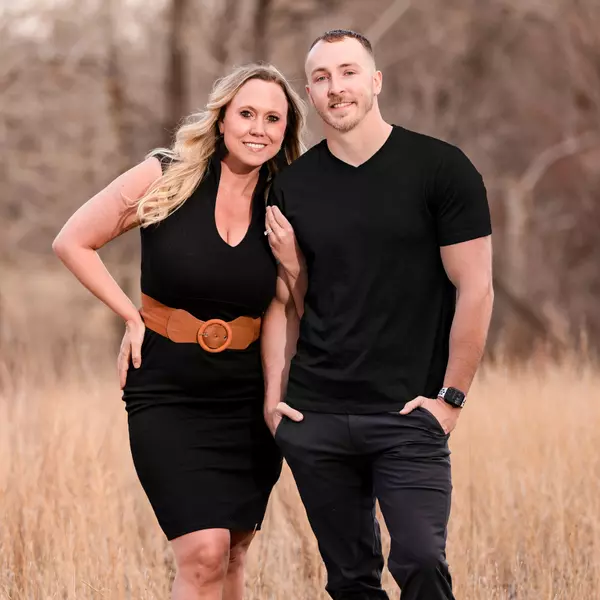
A conventional loan can be one of the most flexible ways to buy a home in Colorado Springs, but the right setup depends on your credit, savings, timeline, and plans for the property. We're Crystal Sisler and Shawn Bedel with Everyday Properties & Investments, powered by eXp Realty, and we've helped more than 300 families buy and sell across the Pikes Peak region. We'll connect you with experienced local lenders, help you compare loan options side by side, and build an offer strategy that actually fits the market.
Call or text us at 719.238.1771. No pressure, just straight answers.
This article is general educational information, not lending, legal, or tax advice. Crystal Sisler and Shawn Bedel are licensed real estate agents, not mortgage lenders. Loan programs, limits, and guidelines change, and eligibility depends on your individual situation, so always confirm details with a licensed mortgage professional.
Categories
Recent Posts